U.S. Capitalism….with Chinese Characteristics — Made in America
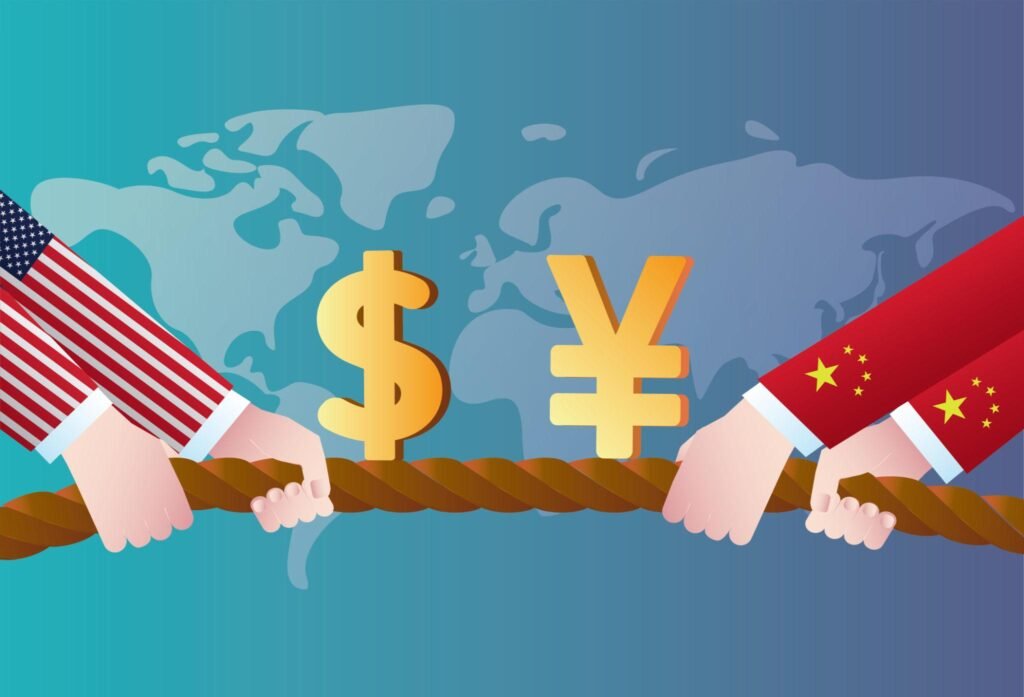
For most of the modern era, one of the easiest ways to distinguish American capitalism from the Chinese economic model was to ask a deceptively simple question: who owns the companies? China’s answer has always been complicated. It has enormous private companies, highly competitive markets and hundreds of millions of people responding to prices, profits and entrepreneurial incentives, yet the Communist Party has never accepted the Western proposition that strategically important industries should simply be left to the market. State-owned enterprises remain enormous, the government deliberately manages state capital and China has spent years developing what it calls a mixed-ownership economy, in which private capital, public capital and political direction can coexist. Chinese policy continues explicitly to support both private enterprise and the strengthening of state capital.
The United States traditionally told itself a very different story. Government establishes the rules, companies compete within them, investors own the companies and markets decide where capital should go. Washington might tax businesses, regulate them, purchase their products, subsidise research or rescue them during an emergency, yet direct government ownership of ordinary listed corporations was generally regarded as exceptional. Donald Trump may now be changing that distinction more profoundly than almost anyone expected, while doing so under the banner of defending American capitalism against Chinese economic power.
During the past year the United States government has acquired significant ownership positions in Intel, MP Materials, Lithium Americas and Trilogy Metals, while becoming increasingly willing to combine equity with loans, guaranteed purchases, price support and regulatory decisions. These transactions differ substantially from one another, so describing them as a coherent American version of Chinese state capitalism would go much too far. Taken together, however, they suggest something more interesting than a collection of isolated deals. Washington is becoming increasingly comfortable not merely regulating strategic markets or subsidising strategically important companies, but actually becoming an investor inside them.
Intel is probably the most extraordinary example because in August 2025 the Trump administration converted billions of dollars of previously awarded CHIPS Act and defence funding into approximately a 10 per cent government stake in the company. Intel described the transaction as an $8.9 billion government investment, funded principally through $5.7 billion in previously awarded but unpaid CHIPS grants and $3.2 billion associated with the Secure Enclave programme. Washington therefore moved from giving Intel public money to becoming one of Intel’s owners.
The distinction is much more important than it initially sounds. If Washington wants America to manufacture more advanced semiconductors, the traditional response would be to create favourable tax conditions and hope companies responded. A more interventionist government could offer grants, loans or subsidies in exchange for factories being built in America. The Intel arrangement goes one step further because taxpayers receive an equity claim on the company they are supporting. If the investment performs badly, taxpayers participate in the risk, just as they effectively would have done through a conventional subsidy. If Intel performs spectacularly well, however, taxpayers also participate in the upside.
There is an intuitive logic here which cuts rather entertainingly across conventional American left-right politics. Bernie Sanders, hardly Donald Trump’s natural ideological companion, supported the principle that companies receiving enormous taxpayer support should provide taxpayers with equity in return. The argument is straightforward: if Intel needs billions of dollars because semiconductor manufacturing is strategically important to the United States, why should taxpayers socialise the cost while existing shareholders retain all the potential capital gain?
The subsequent Intel story makes that argument politically seductive. Intel’s shares have nearly tripled during 2026 as optimism surrounding its turnaround has increased, while the company has now announced a $15 billion share sale to exploit its dramatically higher valuation and finance further expansion. None of this proves that government ownership caused Intel’s recovery. New management, restructuring, semiconductor demand and renewed confidence in Intel’s manufacturing roadmap all matter, and it would be economically illiterate to look at the rising share price and announce that Trump’s equity investment created it. The political optics are nevertheless remarkable. Washington converted subsidies into shares and subsequently watched the value of the underlying company surge.
Once that happens, a question which would have sounded distinctly un-American a decade ago begins to sound perfectly reasonable. If government intervention is necessary anyway, why should taxpayers receive only the cost while private shareholders receive all the capital gain? That question takes us surprisingly close to one of the underlying principles of China’s hybrid economic model, where the state does not simply regulate private capital from outside but frequently participates directly in ownership, investment and strategic capital allocation. China’s system has evolved enormously from the Maoist economy in which state ownership dominated almost everything, towards a much more sophisticated mixture of markets, private enterprise, public companies, state investment vehicles and centrally or locally controlled enterprises. Trump is obviously not recreating that system, because American capital markets remain overwhelmingly private and there is nothing remotely equivalent to China’s immense network of state enterprises. Something subtler appears to be happening. America is rediscovering the idea that national power may sometimes require ownership rather than regulation.
Rare earths make the transformation even clearer. In July 2025, the Department of Defense reached an extraordinary agreement with MP Materials, operator of the Mountain Pass rare-earth mine in California. The Pentagon committed $400 million for preferred equity and warrants which positioned it to become MP’s largest shareholder, while simultaneously providing a $150 million loan, agreeing to a ten-year price floor for important rare-earth products and committing to purchase magnets from future American production. The government consequently became an investor, lender and customer while also effectively guaranteeing a minimum price for strategically important output.
The reason is China. Rare earths are indispensable to technologies ranging from electric vehicles and wind turbines to electronics, missiles and advanced military systems, while China dominates much of the global processing and permanent-magnet supply chain. Beijing has also demonstrated its willingness to use restrictions on strategically important materials as geopolitical leverage. An American rare-earth producer operating according to purely commercial incentives therefore confronts an uncomfortable problem. If Chinese supply pushes world prices sufficiently low, an American mine can become uneconomic. Investors withdraw, domestic production disappears and America returns to dependence upon China. The Pentagon’s response was remarkable because it effectively decided that the market price was no longer the only price that mattered. Its agreement guaranteed MP Materials a floor of $110 per kilogram for key rare-earth products, around twice prevailing Chinese market levels when the deal was announced. The objective was not to discover which producer could supply the material most cheaply. The objective was to guarantee that an American producer continued to exist.
That is industrial strategy in an unusually pure form. National resilience is treated as something worth paying for even when the global market would select a cheaper foreign supplier. China has understood that logic for decades. The United States is rediscovering it.
Lithium followed a similar pattern. In September 2025, the Department of Energy acquired a 5 per cent stake in Lithium Americas and another 5 per cent interest in its Thacker Pass joint venture with General Motors. Thacker Pass is expected to become one of the largest lithium sources in the Western Hemisphere, making the reasoning fairly obvious. Washington was again deciding that ownership of a strategically important resource company could itself be an instrument of industrial policy.
Then came Alaska, where the story becomes especially interesting because government ownership intersects directly with government regulation. On October 6, 2025, Trump directed his administration to permit the Ambler Road, a proposed access route across remote north-western Alaska intended to open the mineral-rich Ambler district. The Biden administration had previously blocked the project over environmental concerns and its potential effects on wilderness, wildlife and local communities. At almost exactly the same time, the federal government announced a $35.6 million investment in Trilogy Metals, one of the companies positioned to benefit from development of the district, giving Washington approximately 10 per cent of the company together with warrants capable of increasing its position by another 7.5 per cent.
This creates a genuinely fascinating political-economy problem because the government controls the regulatory process which can dramatically increase the commercial value of the mineral assets while simultaneously owning part of a company whose prospects improve if those assets are developed. Nothing about that arrangement automatically demonstrates corruption or illegality. There is a perfectly coherent national-security argument that America urgently needs domestic copper, cobalt and other critical minerals and that taxpayers should receive an economic return when public policy creates private value. The governance problem nevertheless becomes obvious because the regulator has also become an investor.
A government deciding whether a road should cross environmentally sensitive territory should theoretically weigh environmental damage, indigenous interests, local economic development and national-security requirements. Once the same government owns shares in a company which benefits from the road, another consideration has entered the calculation: the government’s investment can appreciate.
This is precisely where the comparison with China becomes genuinely useful. Western criticism of the Chinese economic system has often focused upon the difficulty of separating the state as regulator from the state as owner. One branch of the Chinese state can establish the rules governing an industry while another owns companies operating within it, causing commercial objectives, industrial strategy and political priorities to overlap. The American system has traditionally attempted to keep those functions much further apart. Trump’s emerging model begins to blur them.
The transformation is particularly striking because it is being driven by the American right rather than the American left. For decades, American conservatives argued that governments were bad at picking winners because bureaucrats lacked the information available to markets, political incentives distorted investment decisions and protected companies became inefficient. State ownership belonged either to socialism or to the dirigiste traditions of economies Americans regarded as insufficiently capitalist. Trump’s economic nationalism starts from a different question: what happens when the market picks China?
Suppose global markets determine that rare-earth processing is cheapest in China, lithium refining is cheapest in China, semiconductor manufacturing becomes concentrated in East Asia and environmentally controversial American mineral deposits remain underground because importing the same materials is cheaper. Classical free-market economics can describe this as efficient capital allocation which benefits consumers through lower prices. A national-security strategist can describe exactly the same outcome as America outsourcing the foundations of its industrial power to a strategic competitor.
Once the question changes, the optimal economic policy changes with it. Trump’s emerging answer appears to be that certain industries are too strategically important to leave entirely to price signals, which places his administration intellectually much closer to Beijing than its rhetoric would suggest.
China’s extraordinary industrial rise was not produced simply by government ownership. Private entrepreneurship, foreign investment, intense domestic competition, infrastructure, education, enormous savings and integration into global markets all played essential roles. The state nevertheless consistently attempted to identify industries regarded as strategically significant and direct capital, procurement, infrastructure and political support towards them. America increasingly wants to do something similar in semiconductors, rare earths, batteries, artificial intelligence, defence production and advanced manufacturing. The difference increasingly concerns the degree and method of intervention rather than whether intervention should occur at all.
Joe Biden had already moved the United States decisively towards industrial policy through the CHIPS and Science Act and Inflation Reduction Act, using enormous subsidies to encourage semiconductor and clean-energy investment inside America. Trump has not reversed that interventionist turn. In several areas he has radicalised it. Instead of simply giving Intel a grant, the government takes shares. Instead of merely subsidising a rare-earth producer, the Pentagon becomes its largest shareholder, guarantees prices and commits to purchasing output. Instead of simply supporting lithium development, Washington acquires an equity position. Instead of merely approving access to an Alaskan mining district, government acquires an ownership interest in a company positioned to benefit from the development.
The ideological transition is therefore larger than Trump. Republicans and Democrats disagree profoundly about which industries should receive support, what environmental conditions should accompany it and how trade should operate, yet the older argument over whether America should practise industrial policy at all appears to be disappearing. That may prove to be one of the most important economic consequences of competition with China. China has not persuaded America that communism works. It may have persuaded America that strategic capitalism requires a stronger state.
There is considerable historical irony here because the United States has used versions of this model before. Washington intervened extraordinarily aggressively in production during the Second World War, financing factories, guaranteeing purchases, controlling prices and directing industrial investment. The Reconstruction Finance Corporation provided loans and investments throughout the American economy, while federal money and procurement played foundational roles in aviation, aerospace, nuclear technology, computing and eventually the internet. The mythology of American capitalism has always been somewhat more laissez-faire than its history.
The difference today is that emergency-style industrial policy risks becoming ordinary economic policy, with China providing the external pressure which makes that politically acceptable and national security providing the justification. Government equity adds an especially interesting mechanism because it potentially solves one of the political weaknesses of conventional subsidies. If taxpayers provide billions to a corporation, there is a reasonable argument that they should participate in any increase in its value. A grant socialises the cost while leaving the upside private. Equity can socialise part of both.
Intel illustrates the attraction particularly well. Washington was already committed to providing billions under the CHIPS programme, so converting part of that support into shares gave taxpayers potential participation in Intel’s recovery rather than simply transferring public money to a corporation. Rare earths demonstrate another advantage because government ownership can help align public and private interests where normal market incentives produce strategically undesirable outcomes. If American rare-earth production is essential to national security but commercially uncompetitive whenever Chinese prices fall below a particular level, Washington has only a limited range of choices. It can impose tariffs, provide subsidies, guarantee prices, become an investor or accept dependence. The Pentagon has effectively decided to use several of those mechanisms simultaneously.
A third attraction is patience. Private investors normally require returns within commercially reasonable periods, whereas strategically important industries can require decades of development. China can sustain investment in technologies and infrastructure long after a conventional investment committee might have abandoned them. A government shareholder can theoretically tolerate weaker short-term financial returns because the investment produces national-security benefits which never appear on the company’s income statement.
Imagine an American rare-earth operation loses $100 million commercially but prevents a geopolitical adversary from being able to interrupt $50 billion of American defence production. A private shareholder sees a loss. A government concerned with national power can rationally see an insurance premium. Conventional financial accounting becomes inadequate once strategic resilience enters the calculation.
The risks are equally important because government can pick winners while also possessing an impressive ability to keep financing losers. Private investors eventually stop supplying capital to unsuccessful businesses. Governments often find that much harder because employment, congressional districts, lobbying groups and political reputations become attached to the investment. State ownership can therefore create moral hazard if managers and shareholders believe a strategically important company will ultimately be protected from failure.
Capital allocation can also become political. Once officials determine which private companies receive equity investment, guaranteed prices, procurement contracts and regulatory approvals, political access acquires direct economic value. The distance between strategic capitalism and crony capitalism can become remarkably narrow. China demonstrates both sides of that problem: close relationships between political and commercial power can mobilise immense resources extraordinarily quickly while simultaneously generating misallocation, patronage and protection for favoured enterprises.
America would not somehow become immune to those problems because the decisions were being made in Washington rather than Beijing. The Ambler arrangement makes the governance difficulty especially vivid because Washington owns part of Trilogy Metals while simultaneously making regulatory decisions affecting the value of Trilogy’s assets. The government acting as shareholder benefits from greater corporate value, while the government acting as regulator may sometimes need to impose costs upon the company in pursuit of environmental or other public objectives. Those interests can conflict.
Government ownership also creates international complications. Intel warned after the American stake was announced that government ownership could adversely affect international sales and future grants. Roughly three-quarters of Intel’s revenue came from customers outside the United States at the time, so explicit US government ownership could change the way foreign governments and customers perceive what is ostensibly a commercial company.
China has encountered versions of precisely this problem. Huawei’s relationship with the Chinese state became central to Western arguments for restricting its equipment, while Chinese companies frequently insist that they operate commercially as critics question where corporate independence ends and national strategy begins. If Washington increasingly owns strategically important American corporations, Beijing can reasonably ask why an American state-backed semiconductor manufacturer should automatically be regarded as fundamentally different from a Chinese one.
The same problem reaches international trade. Western governments have spent decades criticising Chinese state support for distorting competition. Direct American equity investment, guaranteed prices, government loans and long-term procurement commitments make the moral distinction progressively harder to sustain. The debate may consequently shift from whether states should intervene in markets towards which forms of intervention governments regard as legitimate.
This may be where global capitalism itself is heading. The neoliberal era was built around the proposition that states should create markets and allow private capital to allocate resources within them. The emerging era increasingly treats markets as instruments of national power. Efficiency still matters, yet resilience, strategic autonomy, domestic production and control over supply chains matter alongside it. The nationality of the owner matters. The nationality of the supplier matters. The nationality of the government capable of cutting off the supply matters.
China has operated much closer to this worldview for decades. Trump may be dragging America towards it faster than almost anyone expected, without needing to produce anything resembling conventional socialism. Washington does not need to nationalise Intel when owning 10 per cent may be sufficient. The Pentagon does not need to nationalise MP Materials when it can become a major shareholder, guarantee prices and purchase the output. Washington does not need to operate Alaskan mines when it can approve infrastructure, invest in a mining company and allow private managers and shareholders to do the rest.
This is why the Chinese comparison becomes useful only when used carefully. China’s economy is not simply state-owned; it is hybrid. Markets determine enormous amounts of economic activity while the state retains the ability to intervene directly when political leaders believe strategic objectives are at stake. Private capital remains useful because it allocates resources, disciplines managers and generates innovation, while state capital can pursue objectives which markets might not finance independently.
Trump’s emerging American model begins to look surprisingly similar at the conceptual level without approaching China’s degree of political control. The market remains. The entrepreneur remains. Private shareholders remain. The state simply moves inside the company.
Perhaps the American version will ultimately prove more efficient because government stakes remain relatively limited and deep capital markets continue imposing stronger commercial discipline. Perhaps it will produce an uncomfortable form of crony capitalism in which politically favoured companies receive protection while competitors bear normal market risks. Perhaps these investments will remain confined to a handful of genuinely exceptional national-security industries. The direction is nevertheless fascinating because the United States spent much of the past thirty years encouraging China to make its economy more American, while the movement now appears to be occurring partly in the opposite direction.
China introduced markets, encouraged private enterprise and integrated itself into global capitalism without surrendering the principle that government should retain strategic influence over capital. America is now becoming more comfortable with the proposition that government should sometimes own part of the industries it considers strategically indispensable. Competition with China is therefore producing one of the great ironies of contemporary political economy: Washington is attempting to defeat important elements of China’s economic model by adopting some of its instincts.
The implications could become considerably larger if the investments keep succeeding. A disastrous Intel investment would reinforce the traditional argument that governments cannot pick winners. A dramatically appreciating government stake creates the opposite political incentive because politicians can ask why Washington should hand strategic companies billions of dollars without receiving equity, while taxpayers can reasonably ask the same thing. Once that logic becomes normal, government ownership becomes easier the next time. One stake establishes a precedent, several stakes begin to create a portfolio and a sufficiently large portfolio eventually starts to resemble a sovereign investment strategy.
The United States possesses extraordinary national assets, immense borrowing capacity and the deepest capital markets in the world, yet unlike Norway, Singapore and several Gulf states it has never operated a large sovereign wealth fund systematically investing on behalf of its citizens. Trump’s equity transactions could remain improvised deals scattered across different government departments. They could also become the intellectual beginnings of something much larger.
An American strategic investment fund holding positions in semiconductors, critical minerals, nuclear technology, artificial-intelligence infrastructure, advanced batteries, quantum computing and defence manufacturing is no longer especially difficult to imagine. Government would not replace private capital but invest alongside it, while profits from successful companies could finance future strategic investments. Taxpayers would acquire assets rather than simply financing subsidies, and American industrial policy would begin to develop its own balance sheet.
At that point the distinction between American and Chinese capitalism becomes considerably harder to describe using the vocabulary of the late twentieth century. China would still possess a much larger state sector and vastly greater political control over corporations, while America would remain more privately owned, decentralised and market-driven. Both systems would nevertheless accept an increasingly important common principle: ownership itself can be an instrument of geopolitical power.
Perhaps that is the larger story connecting Intel, MP Materials, Lithium Americas and an obscure mining company in Alaska. Each transaction can be explained as an exceptional response to unusual circumstances because semiconductors are strategically essential, rare earths are strategically essential, lithium is strategically essential and critical minerals are strategically essential. The difficulty with exceptional cases is that enough exceptions eventually constitute a policy.
China’s rise has forced Washington to reconsider an assumption embedded deeply within post-Cold War economics: that the most efficient global allocation of capital would ultimately serve American interests. That proposition looked plausible when America dominated many of the technologies, institutions and financial structures through which globalisation operated. China changed the calculation. If efficient global markets place rare-earth processing in China, semiconductor manufacturing overwhelmingly in East Asia and strategically important mineral supply chains under potential Chinese influence, Washington increasingly sees efficiency itself as a vulnerability.
The response is not to abolish capitalism but to make capitalism serve geopolitical objectives. Tariffs influence where companies manufacture, export controls determine which technologies can be sold, subsidies determine where factories are constructed, government procurement creates markets, price floors protect strategic producers and equity stakes allow the government itself to participate in the resulting returns. Laissez-faire is no longer a particularly convincing description of the system emerging from Washington.
Strategic capitalism may be.
China arrived there first. Trump may now be constructing an American version.
The deepest irony is that economic competition between China and the United States could therefore make their systems marginally more alike. China discovered that markets were extraordinarily useful and incorporated them into a state-directed political economy. America is discovering that state direction can sometimes be extraordinarily useful and is incorporating it into a market economy. Neither system is becoming the other, yet the intellectual boundary between them is becoming less comfortable.
Perhaps this is what great-power competition normally does. Countries do not merely compete against their rivals; they study what works, copy parts of it, adapt those ideas to their own institutions and insist that the resulting system remains fundamentally different.
The United States government now owns roughly a tenth of Intel. The Pentagon has become a major shareholder in America’s principal rare-earth producer. The Department of Energy owns part of one of the country’s most important emerging lithium projects. Washington owns part of Trilogy Metals while simultaneously opening access to Alaska’s Ambler mineral district.
Those facts would have sounded extraordinary in an American economics discussion only a few years ago. They sound considerably less extraordinary now.
Perhaps the question is therefore no longer whether America is borrowing from China’s economic model. The more interesting question is how far it intends to go, because once government discovers that owning part of strategic capitalism can be more attractive than merely subsidising it, selling the shares may eventually become politically harder than buying them.
That is when an intervention stops being an exception and starts becoming a system.