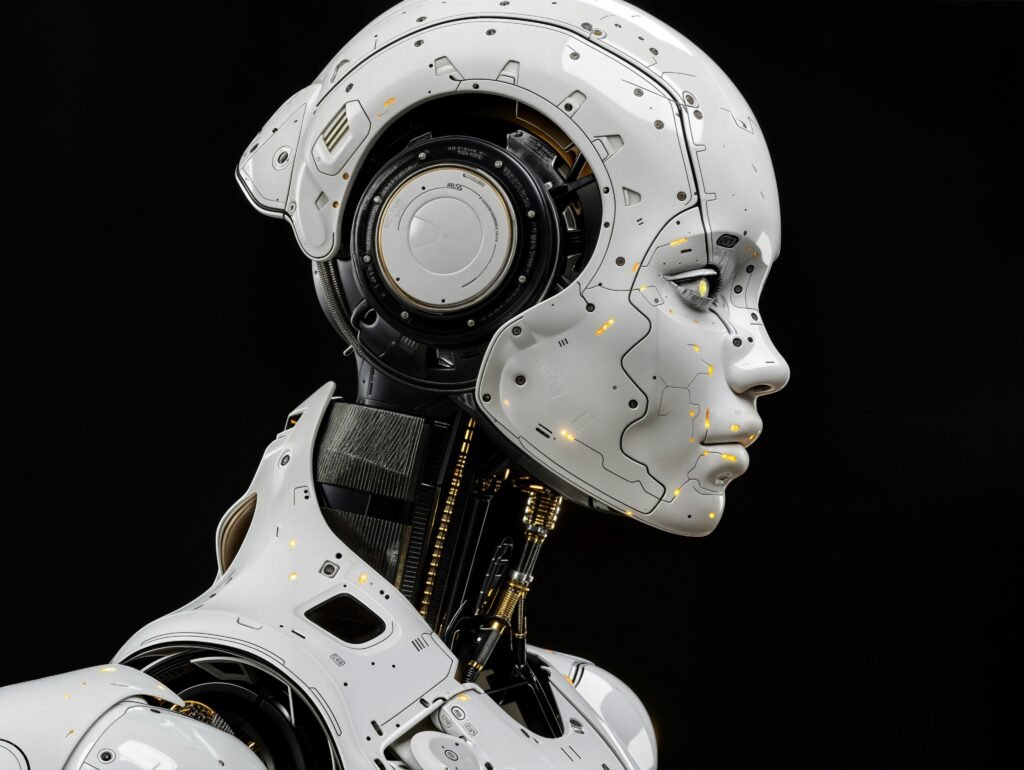
If DeepSeek provides the brain and Unitree provides the body, we should probably start paying rather more attention to the children. That sounds slightly frivolous until you look at what is happening in China’s humanoid-robot industry. Unitree has just priced its Shanghai IPO at around $9 billion, raising roughly $900 million in an offering which was more than 8,000 times oversubscribed by retail investors. The valuation is extraordinary at roughly 219 times projected 2025 earnings, particularly for a company operating in an industry whose eventual commercial applications remain deeply uncertain. Yet perhaps the more interesting number is not Unitree’s valuation but its production. Unitree says it shipped more than 5,500 humanoid robots in 2025, while Chinese manufacturers collectively dominated global shipments. IDC estimated that around 18,000 humanoids were shipped worldwide last year and identified Chinese companies at the top of the market. This remains a tiny industry compared with cars, smartphones or conventional industrial robots, yet China has reached the mass-production stage remarkably early.
That should sound strangely familiar. China did not become dominant in solar panels, batteries and electric vehicles simply because Chinese engineers invented better products than everybody else. Its competitive advantage emerged from something much harder to reproduce: industrial ecosystems. China accumulated manufacturers of batteries, electric motors, sensors, electronics, precision components and increasingly sophisticated software, supported by infrastructure, enormous domestic demand, cheap capital and ferocious competition between Chinese companies. Once those pieces existed together, companies could manufacture products more cheaply, improve them more rapidly and scale them more aggressively than many Western competitors. Humanoid robotics could become the next industry in which the same machinery of Chinese industrialisation goes to work.
This is why I think the conventional framing of the robotics race may be wrong. The obvious question is whether Unitree can build a better humanoid than Tesla’s Optimus, Figure AI or the machines emerging from other American robotics companies. The more important question may be whether China can build sufficiently capable robots so cheaply and in such quantities that possessing the world’s single best humanoid eventually matters less than possessing the world’s largest robot-manufacturing ecosystem. We have seen something remarkably similar with electric vehicles. Western commentary spent years asking whether Chinese manufacturers could produce cars as desirable as German, Japanese or American manufacturers. China quietly constructed the battery supply chains, processing capacity, component manufacturers, factories and domestic competition which eventually allowed companies such as BYD to attack the industry through price as well as technology. Humanoid robotics potentially offers China an even larger prize because the product being manufactured is not merely another machine. It is potentially labour itself.
This is where DeepSeek enters the story and where the love affair in the title becomes considerably less whimsical. DeepSeek has invested in Unitree and the two companies have agreed to cooperate on embodied-intelligence models. DeepSeek provides expertise in increasingly capable and inexpensive artificial intelligence, while Unitree provides the motors, actuators, sensors, balance, locomotion and mechanical engineering required to put intelligence into the physical world. The distinction matters because almost everything we have called the AI revolution so far has occurred inside computers. ChatGPT can write an essay, Gemini can analyse information, DeepSeek can reason through problems and generative systems can create images, software and increasingly sophisticated research. The machine can think in an increasingly loose sense of that word, yet it still cannot walk across the room and empty the dishwasher.
Humanoid robotics is the attempt to solve that problem by giving artificial intelligence a body. Once that happens, AI moves from manipulating information to manipulating the physical world, and that could change the US-China technological competition because the skills required to dominate embodied AI are rather different from those required to dominate large language models. America has extraordinary advantages in frontier AI, semiconductors, software, cloud computing and venture capital. China has extraordinary advantages in manufacturing things. A humanoid robot requires both. Its intelligence may come from a foundation model, yet its usefulness depends upon batteries, motors, gears, cameras, sensors, actuators, hands, joints, power electronics and thousands of manufactured components working reliably together. Those happen to be technologies embedded deeply inside the industrial ecosystem China has spent decades constructing.
The comparison with smartphones is tempting, although I think electric vehicles provide the better historical analogy. America produced some of the most important technologies underlying the smartphone revolution and captured enormous value through companies such as Apple, Google and Qualcomm, while Asian manufacturing ecosystems produced much of the physical hardware. Humanoid robots are different because the physical object constitutes a much larger proportion of the technological challenge. Intelligence without reliable dexterity is useless if the robot cannot pick up an unfamiliar object without dropping it, while a spectacularly engineered body is equally useless if the software cannot understand what it is supposed to do. DeepSeek and Unitree therefore represent something symbolically fascinating: an attempt to combine an increasingly competitive Chinese AI brain with an increasingly competitive Chinese industrial body.
The enormous unresolved problem is training. Humans spend years learning how to interact with the physical world without thinking about it. We know how firmly to hold a glass, how to turn an awkward door handle, how to adjust our balance when somebody bumps into us and how to recognise that an object we have never previously seen should probably be grasped by its handle rather than its blade. Robots find these apparently trivial actions extraordinarily difficult because the physical world contains almost infinite variation. The AI revolution accelerated partly because the internet provided vast quantities of text, images and video from which models could learn. There is no equivalent internet containing trillions of perfectly labelled examples of robots successfully folding towels, loading dishwashers or fitting components onto production lines. China’s emerging advantage may therefore lie not merely in manufacturing robots but in deploying enough of them to create the physical-world data required to make the next generation better.
That produces a potentially powerful feedback loop. Manufacture more robots and you can deploy more robots. Deploy more robots and they generate more physical-world data. More data improves the embodied-AI models. Better models make the robots more useful, which increases demand and justifies larger factories. Larger production volumes reduce costs, which allows still more robots to be deployed. China has used variations of this cycle repeatedly, where enormous domestic scale allows an initially imperfect technology to improve through manufacturing experience and competitive pressure. The robot does not need to be perfect when it leaves the first factory if thousands of deployed machines help make the next generation dramatically better.
There is an important reason China may be unusually motivated to make this work, because the country faces a demographic problem which is normally presented as one of the greatest threats to its economic future. China’s population is ageing, its workforce is shrinking and the enormous supply of comparatively inexpensive labour which helped power its industrial rise cannot continue indefinitely. Fewer workers will eventually have to support more retirees, while manufacturers face rising wages and greater difficulty recruiting people for repetitive or physically demanding jobs. Conventional demographic analysis therefore concludes that ageing threatens China’s manufacturing supremacy. Humanoid robotics introduces a rather wonderful inversion of that argument because the demographic crisis which was supposed to weaken Chinese manufacturing could accelerate the technology which allows China to preserve it.
A humanoid does not need to replace a human worker perfectly for this to matter. Imagine a factory which currently requires one thousand people. If sufficiently capable robots eventually allow it to produce the same output with seven hundred people, the demographic problem has already changed. Improve the robots and perhaps the requirement falls further. Warehouses, logistics centres, construction sites, mines, hospitals, hotels and elderly-care facilities present variations of the same possibility. China does not necessarily need a science-fiction android capable of doing everything a human being can do. It needs machines capable of performing enough individual tasks economically enough that labour scarcity becomes less constraining.
There is an additional reason humanoids may eventually matter despite the existence of conventional industrial robots. Modern factories are already full of machines which perform particular jobs more efficiently than humans ever could, yet much of the physical world was designed around the human body. Doors, stairs, tools, shelves, vehicles, kitchens, warehouses and production lines assume an organism roughly our height, possessing two arms and hands and capable of navigating spaces built for people. Rebuilding every workplace around specialised robots would be enormously expensive. Building a sufficiently capable machine which can use infrastructure already designed for humans could eventually be much easier. The humanoid form therefore looks slightly absurd until you remember that we have spent centuries constructing the world around ourselves.
The implications then move far beyond China’s domestic economy because China could eventually export the solution to its demographic problem. This is where I think the real geopolitical story begins. Western countries spent several decades worrying about manufacturing jobs moving to China because Chinese labour was cheaper. Factories closed in parts of Britain, America and Europe as production moved to Chinese industrial centres, creating what economists came to call the China shock. Tariffs, reshoring, industrial subsidies and Trump’s entire economic-nationalist project are partly attempts to reverse that process by bringing production home.
Now imagine China becomes the dominant producer of inexpensive humanoid robots.
The factory comes back to Ohio.
The labour comes back from China with it.
Except the Chinese labour arrives inside a box.
An American manufacturer might eventually purchase a $20,000 or perhaps one day $10,000 Chinese humanoid containing Chinese batteries, motors, sensors, electronics and AI. The machine works in an American warehouse or factory for years, requiring no salary, immigration visa, healthcare plan or pension. Production has technically been reshored to America, yet part of the labour embodied in the manufacturing process has effectively been imported from Hangzhou. The next China shock might therefore be much stranger than the first. It may not involve Chinese workers producing goods which are subsequently shipped to Western consumers. It could involve China shipping the worker.
This creates an extraordinary problem for Western industrial policy because automation and reshoring are supposed to complement one another. America wants factories to return, yet American labour is expensive and the country already faces shortages of skilled manufacturing workers. Automation makes reshoring economically easier because fewer expensive workers are required. What happens if China becomes the cheapest supplier of the machines which make that automation possible? Washington would confront precisely the contradiction it has already encountered with solar panels and increasingly with batteries. Cheap Chinese equipment can help America achieve a strategic objective while simultaneously making America dependent upon China for the technology required to achieve it.
The United States is already treating robotics as a national-security issue. Washington has been tightening restrictions around foreign-produced connected robotic systems, reflecting concerns about communications, sensors, software provenance and the security implications of machines capable of observing and moving through physical environments. That concern is understandable because a connected humanoid robot is fundamentally different from an imported toaster. It contains cameras and sensors, maps its surroundings, potentially transmits information and increasingly makes autonomous decisions. A Chinese robot working inside an American warehouse could therefore represent both a productivity tool and a cybersecurity problem.
The policy dilemma becomes uncomfortable very quickly. Restrict Chinese humanoids and American companies may have to pay substantially more for automation, slowing productivity improvements and making reshored American manufacturing less competitive. Allow them to dominate the American market and Washington risks discovering that the industrial renaissance it spent billions subsidising depends upon Chinese machines. The argument begins to resemble the battle over Huawei, except the Chinese equipment is no longer sitting inside a telecommunications network. It is walking around the factory.
Europe potentially faces an even harder problem because its demographics are worse in several countries, energy is expensive and manufacturers already struggle to compete with Chinese costs. German industrial companies could desperately need automation while European governments simultaneously worry about another strategic manufacturing industry falling under Chinese control. The political debate over Chinese EVs gives us a preview. Consumers benefit from inexpensive products, manufacturers benefit from inexpensive inputs and governments worry that allowing those products into the market destroys the domestic industry required to make them independently. Humanoid robots could eventually make that argument much more emotionally explosive because the imported product is explicitly designed to replace human labour.
That raises another question which goes beyond geopolitics into political economy. Globalisation allowed companies to arbitrage differences in wages by moving production to cheaper workers. Robotics allows them to arbitrage labour itself. Once a machine becomes capable of performing a sufficiently broad range of human tasks, labour begins behaving more like capital because the productive worker can be purchased once rather than hired continuously. If China dominates the manufacture of that capital, it could capture an extraordinary share of the value created by global automation even when the factories themselves remain in other countries.
This does not mean we are about to see millions of Unitree robots replacing factory workers next year. The sceptical case is important because humanoid robotics remains deeply immature. Unitree itself acknowledges substantial uncertainties surrounding real commercial applications, while much present demand comes from research, education, demonstrations, entertainment and data collection rather than factories replacing entire shifts of workers. Robots which can dance impressively on a stage can still fail at mundane tasks humans perform without conscious thought. Dexterity, endurance, battery life, safety, reliability and the ability to adapt to unfamiliar situations remain enormous problems. The valuation of Unitree at more than two hundred times earnings tells us at least as much about investor expectations as it does about the economics of the present business, while Reuters Breakingviews has noted that the company’s first-quarter profit fell sharply amid rising research and development costs and intense competition.
The important geopolitical question is therefore not whether humanoid robots have already arrived. It is whether China is constructing the ecosystem most likely to dominate them if they do.
That distinction matters because China can afford for the first generation to be disappointing. Its domestic market can absorb experimental machines, universities can use them, companies can collect data and dozens of manufacturers can compete to solve individual engineering problems. Some companies will fail. Others will consolidate. Prices will fall. Components will standardise. Supply chains will deepen. The pattern begins looking remarkably similar to the early stages of several industries which Western observers initially dismissed because Chinese products were inferior before discovering several years later that inferior had become adequate, adequate had become competitive and competitive had become dramatically cheaper.
This is where my 20% Rule enters the argument again. China does not necessarily need to build the world’s most sophisticated humanoid robot. Suppose an American machine eventually performs 100 different tasks brilliantly but costs $150,000, while a Chinese robot performs seventy of those tasks adequately and costs $25,000. The American robot may unquestionably be technologically superior. The Chinese machine could still be economically dominant because a factory can purchase six of them for roughly the price of one American competitor.
The same logic becomes considerably more disturbing when we move from factories to warfare. Unitree describes itself as a civilian robotics company, and we should be careful not to turn every Chinese humanoid into a future autonomous soldier. The dual-use implications are nevertheless unavoidable because technologies which allow robots to navigate unfamiliar environments, maintain balance, climb stairs, manipulate objects and respond autonomously to changing conditions have obvious military applications in logistics, reconnaissance, bomb disposal, casualty evacuation and eventually potentially combat support.
Ukraine has already demonstrated what happens when inexpensive mass-produced technology collides with traditional military procurement. A relatively cheap drone does not need to be technologically superior to a multimillion-dollar weapons platform if thousands can be produced and lost without threatening the underlying war effort. Quantity acquires a quality of its own. Humanoid and quadruped robots could eventually introduce the same logic to ground warfare.
Imagine one country possesses several thousand exquisite military robots costing millions of dollars each while another can manufacture hundreds of thousands of less sophisticated machines for a fraction of the price. The second country may possess the more useful military capability even if every individual machine loses a technical comparison. Here again, our obsession with identifying the technological leader can obscure the geopolitical question. America may build the best robot. China may build enough robots.
This connects directly to one of the largest differences between the American and Chinese technology ecosystems. America remains extraordinarily strong in the intangible layer of the modern economy: software, frontier AI models, semiconductor design, cloud computing and venture capital. China has become extraordinarily strong at turning technologies into physical objects at scale. Solar panels, batteries, drones, telecommunications equipment and electric vehicles all demonstrate different versions of that capability. Humanoid robotics sits precisely at the intersection of those two worlds because the machine requires both intelligence and atoms.
DeepSeek and Unitree consequently matter symbolically as much as commercially. DeepSeek demonstrated that China could produce highly capable AI models with dramatically fewer resources than many Western observers expected. Unitree demonstrates that China can already manufacture humanoid robots in thousands rather than merely display prototypes at technology conferences. Put those capabilities together and the question changes from whether China can catch America in artificial intelligence to whether America and China are actually competing in slightly different things.
America may continue producing the most capable artificial intelligence.
China may become better at producing artificial labour.
The distinction could become enormously important because the economic value of intelligence ultimately depends upon what it can do. An AI model which writes a brilliant report increases the productivity of a knowledge worker. An embodied AI which can unload a truck, assemble a component, stock a warehouse, inspect a pipeline or assist an elderly person enters an entirely different part of the economy. Services and physical labour constitute enormous portions of global economic activity which generative AI has barely touched.
This also suggests that China’s demographic weakness and America’s technological strength could interact in ways almost exactly opposite to conventional expectations. China desperately needs artificial labour because its workforce is ageing, giving Chinese companies a huge domestic incentive to develop it. America leads in artificial intelligence, potentially giving American companies the better brain. The winner may therefore be whichever ecosystem manages to combine the two first and then manufacture the result cheaply enough to deploy it everywhere.
The DeepSeek–Unitree relationship is therefore worth watching far beyond the fortunes of either company. It represents a possible marriage between China’s rapidly improving software capabilities and the manufacturing ecosystem which has already transformed global competition in several physical industries. The children of that relationship may initially stumble, fall over, drop things and occasionally look ridiculous. Early automobiles broke down. Early smartphones were expensive. Early solar panels were inefficient. Early technologies often look unimpressive precisely because we judge their first generation against the mature technology they are trying to replace.
The question is what happens after ten generations.
If China can repeat even part of the industrial learning curve it achieved in batteries, solar panels, drones and electric vehicles, humanoid robots could become dramatically cheaper and more capable during the next decade. China’s ageing population would create domestic demand, its factories would provide testing grounds, its supply chains would reduce component costs, DeepSeek and other Chinese AI companies would improve the intelligence, while every deployed robot would potentially generate data which improves the next one.
At that point the geopolitical implications become enormous because the country which manufactures artificial labour acquires something more consequential than another successful export industry. It acquires the ability to influence the cost of physical work across the global economy
Plug that into future U.S., French or German elections 

 |