European Agriculture as a Portfolio-Management Problem: Denmark Is the Poster Child
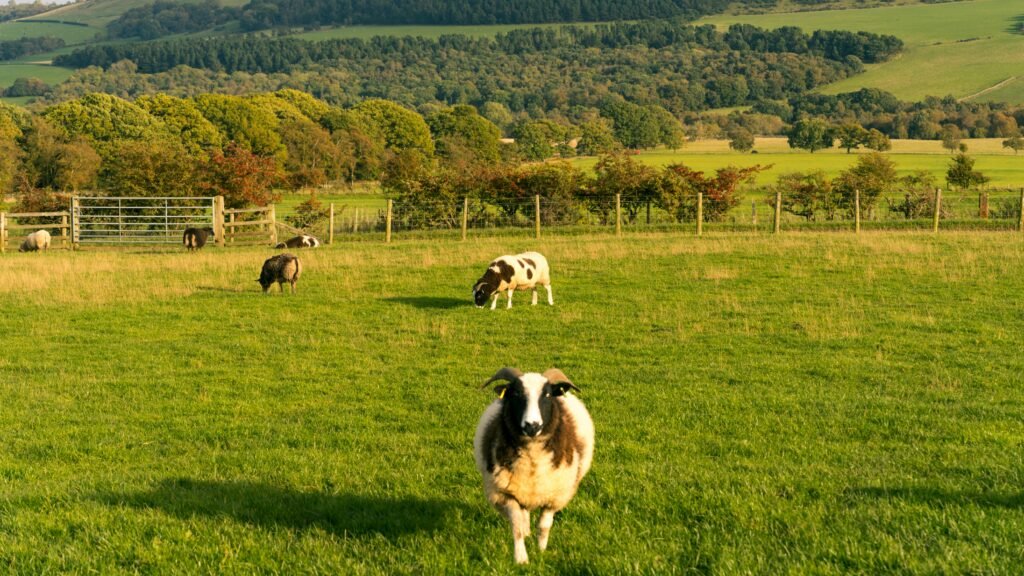
There is something superficially compelling about Denmark’s great agricultural bargain. The country intends to transform its landscape on a scale not attempted for more than a century, creating 250,000 hectares of new forest and converting around 140,000 hectares of lowland farmland, including carbon-rich soils, towards nature, wetlands and meadows. It is an extraordinarily ambitious attempt to reconcile farming with the obligations imposed by climate change, biodiversity loss and decades of nutrient pollution, and there is much about it that deserves admiration rather than reflexive opposition. Danish agriculture is intensive; drained carbon-rich soils emit greenhouse gases; nitrogen escaping from farmland contributes to the degradation of fjords and coastal waters; and an affluent society is entitled to decide that some of the landscape inherited from increasingly intensive twentieth-century agriculture should be returned to nature. The Green Tripartite is therefore not easily dismissed as environmental indulgence imposed upon farmers by people who do not understand where food comes from. Indeed, one of its most interesting characteristics is that agricultural, industrial and environmental interests participated in its construction. The question is not whether its environmental objectives are legitimate, but whether a policy that appears rational when Denmark is treated as the relevant unit of analysis remains equally rational when the boundary is expanded to Europe and ultimately to the global food system.
That distinction matters because food production is unusually susceptible to geographical accounting. Denmark can reduce Danish agricultural emissions by producing less food in Denmark, just as it can improve Danish water quality by reducing fertiliser-intensive production near Danish waterways, but Danish consumers do not necessarily respond by eating proportionately less, nor do foreign consumers who previously bought Danish food necessarily stop consuming it. Some production moves, and some of the environmental burden associated with that production moves with it. Whether the world has become environmentally better or worse therefore depends not simply upon what disappears from Denmark but upon what appears in its place. Danish researchers themselves recognise the difficulty: work at the University of Copenhagen is explicitly attempting to model the Green Tripartite’s international land-use and leakage effects, including whether shifting Danish land from agriculture to forest and open nature could induce deforestation or increased emissions elsewhere as production moves abroad. That does not demonstrate that the policy is mistaken; it demonstrates why national environmental accounting cannot by itself establish that it is right.
The issue becomes particularly interesting because Denmark is not withdrawing production from an obviously marginal agricultural economy. It possesses one of Europe’s unusually productive agricultural systems, embedded in a sophisticated network of food processing, genetics, machinery, veterinary expertise, agricultural technology, logistics and scientific research. In 2025 Denmark harvested approximately 9.5 million tonnes of grain from 1.238 million hectares, with winter wheat yields reaching 8.8 tonnes per hectare and spring barley seven tonnes. More revealingly, grain acreage fell 17 per cent between 2010 and 2025 while production rose 8 per cent, illustrating how far productivity improvements have already allowed Denmark to decouple output from land use.
The relevant environmental question is consequently not whether nature possesses value — plainly it does — but whether Europe may sometimes obtain more environmental benefit by retaining food production on highly productive land than by restoring that particular land while allowing the displaced production to migrate somewhere less efficient. If one Danish hectare can produce what requires materially more land elsewhere, the environmental calculation cannot sensibly stop at the Danish border. A forest planted in Denmark may sequester carbon and support biodiversity, yet if the resulting reduction in food production requires additional cultivation elsewhere, some fraction of that benefit may be offset; if replacement agriculture requires greater irrigation, more fertiliser, additional land conversion or higher emissions per tonne, Denmark’s environmental accounts can improve while the environmental efficiency of the wider food system deteriorates.
Agriculture may therefore require an environmental extension of comparative advantage. We have become accustomed to asking where a product can be produced most cheaply, but in a world of constrained land, water and carbon budgets the more important question may increasingly be where it can be produced with the lowest combined environmental cost. The meaningful denominator is not necessarily emissions per Danish hectare but environmental cost per tonne of food ultimately consumed. That reframing does not invalidate afforestation or wetland restoration; it merely forces the environmental consequences of replacement production into the same calculation.
There is, however, another reason for widening the lens beyond Denmark, and it may ultimately prove more consequential than leakage itself. The geography of European agricultural risk is changing. Southern Europe faces the most severe structural combination of chronic drought, extreme heat and water scarcity; central and eastern Europe face an increasingly volatile mixture of drought, heat, aridification and flash flooding; northern Europe faces its own problems of unstable winters, saturated soils and rising temperatures. No region is becoming climatically safe, and it would be misleading to portray Denmark as a permanently moist agricultural sanctuary, but resilience is relative rather than absolute. European climate assessments point towards hotter summers everywhere, drier conditions in the south and heavier rainfall across parts of northern and central Europe, while the economic consequences of agricultural climate shocks are becoming increasingly significant.
Water may prove decisive. Southern Europe already accounts for around 60 per cent of EU agricultural water abstraction, while climate change is expected both to expand the agricultural area requiring irrigation and to increase irrigation demand where irrigation is already necessary. Europe is therefore not simply confronting a question of whether Spain, Italy, Greece or southern France will continue producing food — they obviously will — but what increasingly scarce resource will be required to maintain that production, how variable yields become during extreme summers, and how intensely agriculture must compete with cities, industry and ecosystems for the same water. The problem is not that Mediterranean agriculture disappears; it is that the reliability and marginal cost of maintaining its extraordinary output may deteriorate precisely as Europe continues to assume that productive capacity elsewhere is interchangeable with it.
This is the first point at which Denmark begins to look counterintuitive. If the climatic constraints affecting European agriculture were broadly stable, the opportunity cost of converting a Danish hectare could be assessed largely from its present output and environmental externalities. Once the alternatives become less reliable, however, the calculation changes. A productive Danish hectare can become strategically more valuable without becoming physically more productive, simply because the assets capable of replacing it have become riskier. Europe may therefore be contemplating the permanent conversion of some northern agricultural capacity at the same time that climate change is increasing the scarcity value of precisely that category of capacity. The paradox is not that Denmark is responding to climate change by restoring nature; it is that climate change itself may be making part of what Denmark is surrendering more valuable.
This is where European agriculture begins to resemble a portfolio-management problem. An investor does not evaluate an asset solely according to its average return, but also according to its volatility, its relationship with other assets and its behaviour during periods of stress. A collection of individually efficient assets can form a fragile portfolio if they are exposed to the same underlying risk, while an asset that appears relatively unremarkable in normal conditions can be extremely valuable if it performs when others fail. Agriculture has an analogous characteristic: the value of productive capacity lies partly in the imperfect correlation between the climatic and geopolitical risks affecting different regions.
For much of the post-war period Europe had little reason to think about agricultural geography in these terms because it possessed an enormous, largely unpriced reserve of redundancy. The Common Agricultural Policy emerged from the memory of scarcity, but European farming subsequently became so productive that the political problem gradually shifted from ensuring sufficient food towards managing surpluses, supporting farm incomes and limiting environmental damage. International trade added another layer of security, while immediately to Europe’s east lay the extraordinary agricultural territories of Ukraine and Russia. Their black-earth regions and Black Sea infrastructure meant that the wider Eurasian food economy contained enormous surplus capacity. Neither country was formally Europe’s strategic agricultural reserve, but economically they provided something close to a latent Plan B: if production was constrained elsewhere, vast quantities of grain remained potentially available to international markets.
Europe has now lost much of the strategic value of that Plan B, and this may be the most consequential change in the entire calculation. Russia remains one of the world’s great agricultural powers and will continue exporting enormous quantities of grain, but European policymakers can no longer confuse commercial availability with strategic reliability. The same Europe that discovered the danger of assuming that cheap Russian gas would always remain available cannot logically treat Russian food exports as an unquestioned insurance policy against future agricultural stress. Ukraine presents the inverse problem. Its agricultural endowment remains extraordinary and its eventual reconstruction and closer integration with Europe could substantially strengthen European food security, yet war has demonstrated that fertile soil alone does not guarantee usable capacity. Ports can be attacked, shipping routes disrupted, fields mined, storage facilities damaged, labour mobilised and insurers deterred. Agricultural production may exist physically while becoming strategically inaccessible.
The transformation is therefore deeper than simply losing Russian reliability or suffering temporary disruption to Ukraine. Europe has discovered that a vast agricultural reserve which appeared almost geographical — those immense productive plains would always be there — was in fact conditional upon politics, infrastructure and peace. The agricultural map did not change in 2022; the risk weighting attached to it did.
That should make the remaining diversification inside Europe more valuable. Ukraine’s eventual recovery should certainly add another powerful producing region to the European system, but it should complement rather than substitute for French, Polish, German, Spanish, Dutch and Danish capacity. The lesson of Ukraine is not that Europe should concentrate future agricultural production on Ukrainian black earth once peace returns. It is that Europe should be wary of mistaking concentration for efficiency simply because the concentrated asset happens to be extraordinarily productive. A drought in Spain need not coincide with poor Danish conditions, excessive rainfall in northern Europe need not coincide with a Ukrainian heatwave, and disruption in the Black Sea need not prevent French or Polish grain reaching European consumers. Resilience resides partly in those differences.
The question Europe should therefore ask is not merely how much food it can produce but how geographically diversified its capacity to produce food remains under different combinations of climatic and geopolitical shock. Aggregate output cannot answer that question. A continent producing slightly less food through a widely dispersed set of agricultural systems may be more resilient than one producing more through a smaller number of increasingly correlated regions. What matters is not simply expected agricultural production but risk-adjusted agricultural capacity.
Once the problem is expressed in those terms, productive land acquires an option value that conventional agricultural accounting captures poorly. A Danish hectare has an obvious current value represented by the crops or livestock it supports, but it also possesses a contingent value: it can produce food when another region cannot. That value may remain almost invisible during years of European abundance and become extremely important during a Mediterranean drought, a central European heatwave or a disruption to Black Sea exports. The analogy with electricity systems is useful because electricity markets recognise that generating capacity can be valuable even when it is not continuously utilised. Some assets are retained because they can operate when demand surges or another source fails. Europe may need to begin thinking about certain agricultural capacity in comparable terms.
The strategic reserve in this conception is not simply grain sitting in silos but the productive apparatus capable of generating food over time: soil, farmers, machinery, storage, processors, transport networks, veterinary services, agricultural research and the accumulated knowledge embedded in farming communities. This matters because agricultural capacity is much less reversible than the physical existence of a field might suggest. If farming contracts sufficiently within a region, machinery dealers consolidate, contractors disappear, processors become uneconomic, storage is repurposed and skilled labour moves elsewhere. Afforestation adds another form of irreversibility. Planting agricultural land with trees can be accomplished comparatively quickly; deciding decades later to clear mature forest because Europe needs additional food production would confront ecological, legal and political obstacles that did not exist when the trees were planted. The hectare survives, but the option to farm it becomes materially more expensive to exercise.
Europe is therefore not merely deciding whether it prefers wheat or woodland on a given hectare in 2026. It may be extinguishing an option whose value rises as other options deteriorate. If Mediterranean water becomes scarcer, if central European harvest volatility increases and if Black Sea supply remains strategically uncertain, the shadow price of resilient northern agricultural capacity rises even if the physical productivity of the land does not. In financial terms, the volatility of the portfolio has increased while several traditional hedges have weakened, yet one possible response is to sell part of an asset whose diversification characteristics may be improving. That does not make the sale irrational, because the environmental return from conversion may still be greater, but it means the hurdle rate for permanent conversion ought logically to be rising rather than falling.
The identity of the land Denmark converts therefore becomes crucial. A hectare of drained carbon-rich lowland soil producing modest agricultural value while generating substantial greenhouse-gas emissions is not equivalent to highly productive mineral soil with reliable rainfall and comparatively low vulnerability to future water scarcity. Removing the first may simultaneously improve Denmark’s environmental performance and the efficiency of its remaining agricultural system. Permanently removing the second could surrender an asset whose strategic value is rising. Headline acreage targets consequently reveal surprisingly little. A serious assessment would distinguish land according to agricultural productivity, yield stability, water dependence, soil quality, carbon consequences, biodiversity potential, nutrient losses, future climatic resilience and the environmental cost of replacement production.
Climate change makes this calculation unusually difficult because it strengthens arguments on both sides. It increases the urgency of restoring carbon-rich soils, creating forests, rebuilding biodiversity and reducing agricultural emissions, while simultaneously increasing the strategic importance of productive land in regions relatively insulated from the worst combinations of heat and water scarcity. Taking climate change seriously therefore does not provide a simple instruction to replace northern farmland with carbon sinks. It creates competing environmental claims upon the same hectare. Forests sequester carbon and support ecosystems; wetlands store carbon and water; productive farmland in comparatively resilient climates can reduce pressure to produce food in regions facing greater climatic constraints. The correct choice depends upon the characteristics of the particular land and the consequences of moving its production elsewhere.
It is entirely possible that Denmark’s programme will perform remarkably well against precisely this test, and this is where the story becomes more interesting than a conventional critique of Green policy. Denmark may succeed in withdrawing disproportionately environmentally damaging land while increasing productivity on the agricultural land that remains. The agreement itself explicitly envisages a more sustainable, high-tech and efficient agricultural sector and investment in new climate technologies. Danish agriculture has already demonstrated that declining grain acreage need not translate directly into declining output. If that trajectory continues, Denmark could restore significant areas of environmentally sensitive land without suffering a proportionate reduction in food production.
If so, Denmark would not be the poster child for European agricultural folly. It might be the poster child for intelligent agricultural portfolio management.
That possibility matters because the portfolio argument cuts both ways. A competent portfolio manager does not preserve every asset merely because diversification has value; assets with poor expected returns, high external costs or better alternative uses should be sold. If Denmark is effectively identifying agricultural land with unusually high carbon, biodiversity and water-quality costs, removing that land while protecting its most productive and resilient soils, and then using technology to increase the efficiency of what remains, the Green Tripartite begins to look less like agricultural retreat than strategic rebalancing. The appropriate question is therefore not how many hectares Denmark removes from farming but what characteristics those hectares possess and how much genuine productive capacity disappears with them.
Denmark might also be moving deliberately from agricultural volume towards agricultural value. A smaller physical footprint could coexist with an increasingly sophisticated economy built around genetics, enzymes, precision agriculture, robotics, fermentation, agricultural software and intellectual property. Yet this introduces another consideration, because agricultural technology does not develop independently of agriculture. Denmark’s food and farming economy supports a dense industrial ecosystem of processors, machinery companies, veterinarians, geneticists, engineers, logistics providers and researchers, while domestic farmers provide sophisticated customers and experimental environments for technologies that later become exportable. Modest agricultural contraction might make that system more productive by encouraging consolidation, innovation and higher-value activity; excessive contraction could eventually weaken some of the agglomeration effects that sustain agricultural innovation. The relationship would not be linear, but neither should it be assumed to be nonexistent.
The marine consequences require similar care. Denmark has compelling reasons to reduce nutrient runoff into coastal waters, where nitrogen and phosphorus contribute to eutrophication, algal growth and oxygen depletion. Restoring wetlands and changing land management can therefore generate substantial local ecological benefits. Yet if food production moves to another watershed, part of the nutrient burden may migrate with it. The replacement producer could be environmentally superior, in which case the global outcome improves, or it could operate under weaker nutrient controls or more vulnerable hydrological conditions. The meaningful question is not merely whether nitrogen disappears from a Danish fjord but whether the total environmental burden associated with the food Europeans consume has declined.
This is the broader Green Export Paradox. Wealthy countries possess an unusual ability to improve their territorial environmental performance by importing environmentally intensive production. Carbon emissions, water consumption, nutrient pollution and biodiversity loss can all decline domestically while consumption remains broadly unchanged, provided the physical production associated with that consumption occurs somewhere else. The country becomes greener; the planet does not necessarily do so. Denmark may avoid that trap completely, but a serious assessment of the Green Tripartite has to establish that rather than infer it from improvements inside Denmark.
The political temptation is to turn this into another story about environmental ideology sacrificing productive capacity to an aesthetic preference for forests, wetlands and meadows. That would make for a simpler polemic but a weaker argument, because the deeper potential failure is not taking environmental problems too seriously but defining them too narrowly. A global climate cannot be optimised through national carbon accounts alone; biodiversity restoration cannot be judged without asking whether imported food causes habitat conversion elsewhere; water policy cannot ignore the water intensity of replacement production; and climate adaptation cannot simultaneously predict worsening Mediterranean water stress while assuming that all European agricultural hectares retain the same strategic value.
The potential criticism is therefore directed less towards environmentalism than towards siloed optimisation. Climate ministries pursue territorial emissions reductions, environmental agencies biodiversity and water quality, agricultural ministries farm viability, trade economists efficient substitution, and security policymakers strategic autonomy. Each can produce a defensible policy within its own institutional boundary while their combined effect leaves the wider system less resilient. Europe should recognise this problem because it has encountered variants of it elsewhere. Dependence upon Russian natural gas was economically rational for many individual actors until geopolitical circumstances exposed the strategic cost of concentration; semiconductor shortages produced a similar rediscovery of capacity risk, while concerns about pharmaceuticals, critical minerals, batteries and defence production have pushed resilience and strategic autonomy towards the centre of European policy. Agriculture belongs within the same conceptual discussion, even though its environmental externalities make the optimisation problem considerably more complicated.
Food security does not require Europe to preserve every field, nor would agricultural autarky make the continent safer. A resilient food system is layered: strategic stocks protect against short disruptions, trade diversifies global harvest risk, technology raises productivity and adaptability, flexible consumption reduces pressure during scarcity, healthy ecosystems support long-term production, and geographically dispersed farmland preserves physical capacity. The question raised by Denmark is whether productive land itself has been undervalued within that mixture because decades of European abundance made its insurance function easy to overlook.
This brings the argument to its most important turn. Denmark may ultimately prove the portfolio hypothesis rather than refute it, because the Green Tripartite gives Europe an opportunity to discover whether environmental restoration can itself be designed as portfolio management. If Denmark maps its land intelligently, withdraws those hectares whose environmental costs are greatest relative to their productive and strategic value, preserves those whose climatic resilience gives them increasing European importance, raises productivity on the remainder and prevents significant leakage abroad, then the policy would do something much more impressive than simply meeting a national emissions target. It would demonstrate how Europe can reduce agricultural land use without proportionately reducing agricultural resilience.
The alternative is considerably more troubling. If Denmark achieves national environmental targets partly by transferring production and its associated footprint elsewhere while permanently reducing some of Europe’s more climatically differentiated agricultural capacity, the problem would not be that Denmark planted too many trees or cared too much about biodiversity. It would be that the policy accurately priced benefits visible within Denmark while inadequately pricing costs dispersed across geography and time. Denmark would have optimised the asset while weakening the portfolio.
That distinction reaches far beyond Denmark because Europe spent much of the late twentieth century managing the consequences of agricultural abundance and consequently became accustomed to treating food availability as a background condition rather than a strategic variable. The coming decades may require a different mindset. Water is becoming more contested, extreme weather more disruptive, the Black Sea more geopolitically uncertain and environmental restoration more urgent at the same time. None of those trends implies imminent European food scarcity, but together they weaken the assumption that agricultural reliability can simply be taken for granted.
The challenge is therefore not to choose food security over environmental security, because the two increasingly belong to the same system. Healthy soils improve drought resilience, wetlands regulate water and support biodiversity, precision agriculture can raise yields while reducing inputs, forests protect watersheds and agricultural technology can lower the environmental cost of production. Europe needs more ecological restoration in some places and continued intensive production in others, while the location of each becomes increasingly important. The policy objective should be to discover the spatial combination that produces the greatest environmental and agricultural resilience rather than maximising any single variable.
Denmark is the poster child because it makes that problem unusually visible. It is small enough for a transformation of land use to be comprehensible, rich enough to finance it, environmentally ambitious enough to attempt it, agriculturally productive enough for the opportunity cost to matter and climatically situated such that its future role in European food production cannot simply be inferred from its past. Its Green Tripartite could prove visionary or reveal a blind spot in contemporary environmental accounting; perhaps, most interestingly, it could do elements of both.
The question Denmark poses to Europe is therefore not simply how many hectares should become forest, how much nitrogen should be removed from coastal waters or how many tonnes of agricultural carbon can be eliminated. It is whether Europe knows how to value a productive hectare whose importance depends partly upon events occurring hundreds or thousands of kilometres away and decades into the future. A Danish field may appear ordinary while Andalusia has water, Ukraine has functioning ports and central Europe enjoys favourable weather. Its strategic character emerges only when one or more of those assumptions fail.
For decades Europe could afford to optimise agricultural efficiency because redundancy was abundant and frequently invisible. Russia and Ukraine formed part of an eastern backstop whose strategic fragility was underestimated; Mediterranean water appeared sufficiently dependable that irrigation could compensate for rainfall variability; international markets made almost any local shortage look replaceable. Climate change, water scarcity and geopolitical disruption are gradually revealing how contingent those assumptions were.
The rational response is not necessarily to stop Denmark’s landscape transformation, nor to preserve every productive field as though famine were imminent. It is to recognise that the price of agricultural resilience has changed. When several traditional hedges become less reliable at the same time, the opportunity cost of disposing of another hedge rises with them.
A competent portfolio manager confronted with increasing volatility, changing correlations and the deterioration of several traditional sources of diversification would not automatically sell an asset simply because its current return could be replaced elsewhere. He would first ask what the portfolio looks like when the apparently independent risks begin to arrive together.
European agricultural policy should begin asking the same question.
Denmark may discover that much of the land it is returning to nature was always more valuable as forest, wetland or meadow than as farmland, in which case the Green Tripartite will have corrected an historical misallocation and perhaps provided Europe with a model worth copying. It may simultaneously discover that certain productive, politically secure and comparatively water-resilient hectares possess a strategic value that decades of agricultural abundance taught policymakers not to price, in which case the intelligent response would not be to abandon the environmental transition but to redesign its geography.
That is what makes Denmark so interesting. The evidence does not yet require us to decide whether it is making a mistake. It requires us to recognise that the calculation by which we would identify the mistake is itself incomplete.
The environmental value of the hectare Denmark converts is comparatively easy to see: carbon stored, nitrogen avoided, habitat restored, water retained. The agricultural value of the hectare it relinquishes is also easy to calculate while Europe is enjoying a normal harvest. What is much harder to price is the tonne of food that hectare might have produced in a year when southern Europe is short of water, central Europe is experiencing another heat shock and the Black Sea is unreliable.
That tonne does not yet exist.
Its value is nevertheless real.
Europe may eventually discover that some of the most important agricultural assets it possesses are valuable not because of what they produce every year, but because of what they remain capable of producing when somewhere else cannot.
The difficulty is that we may only discover their true price after we have exercised the option to give them up