Billie Jean x Kahneman x MSM
Billie Jean: You Hear What They Wanted You to Hear
There is a problem with Billie Jean that has less to do with music than with the way we construct reality. Most listeners think they know what happens because the narrative feels familiar: an attractive woman meets a famous young man, there is dancing and sexual possibility, she later claims he fathered her child, he denies it, and we decide which of them to believe. Yet part of that sequence is not actually given to us. We construct it from suggestive details whose causal relationship is less certain than the coherence of the song makes it seem. Billie Jean can therefore be read not only as a story about accusation, celebrity and paternity, but as a study in how the mind converts incomplete information into narrative and then mistakes that narrative for fact.
The opening demonstrates this at once. Billie Jean is introduced through glamour and appearance, then the encounter moves onto a dance floor surrounded by observers. We recognise the cultural grammar: beautiful woman, young man, dancing, attraction. Yet observation and inference are already separating. We know that the narrator finds her striking and that they dance; we do not know what either intends or what subsequently happens. The mind nevertheless begins to complete the story because familiar narrative is easier to process than unresolved ambiguity.
The dancing matters more once we stop treating the narrator as an anonymous fictional man and restore Michael Jackson’s referential life to the text. For most people dancing in such a story would suggest courtship or social intimacy, but for Jackson it was also profession, identity, performance and public power. The dance floor was one of the principal spaces in which he existed before an audience. Billie Jean therefore enters his most public domain, and the encounter takes place under observation. The song will increasingly turn on the gap between what happens, what appears to happen and what others believe happened.
Jackson’s biography also alters the prior against which the story is heard. He had lived with celebrity since childhood, within the peculiar asymmetry by which strangers could know his face, body, family and public persona while remaining unknown to him. Fame of that scale changes the frequency of imagined intimacy, sexual projection and claims of personal connection. Jackson later associated the conception of Billie Jean with women making claims involving his brothers during the Jackson 5 period rather than with one literal woman. None of this proves anything about the fictional Billie Jean, but it changes the probability structure surrounding the accusation.
This is where Kahneman becomes useful. System 1 is good at recognising patterns and poor at leaving gaps open. Faced with incomplete information, it does not naturally maintain a ledger of what is known, probable and unknown; it associates and completes. The difficult question posed by Billie Jean is what actually happened between these two people. The song does not answer it. System 1 therefore substitutes an easier question: what kind of story does this resemble? A beautiful woman, a dance, a paternity claim and a male denial resemble a familiar human story, so the missing causal links begin to assemble themselves.
This is representativeness operating through narrative. The events resemble the category of the man who sleeps with a woman, fathers a child and later denies responsibility, and once that pattern is activated we become less attentive to whether each link has been established. The decisive sexual event remains unclear. There is an allegation, a denial, attraction, proximity and an invitation involving a room, but none is identical to intercourse. The ellipsis at the centre of Billie Jean is therefore the fulcrum of the song. The listener supplies the event required to make the later accusation coherent and then proceeds as though the text supplied it.
The mother’s warning shows what happens once a preliminary narrative has formed because the same material supports opposed readings. If we already suspect the narrator, the warning sounds like evidence that he had been cautioned about the consequences of sexual behaviour. If we trust him, it sounds like advice to a famous young performer about damaging claims. Neither reading is compelled by the text. What matters is how quickly ambiguous information becomes confirmatory once we adopt a theory.
The photograph works in the same way. If we believe Billie Jean, the suggestion that the child resembles the narrator feels important; if we distrust her, resemblance looks subjective and weak. The photograph becomes a symbol for the song’s epistemology: something appears before us, we interpret it, and the force of that interpretation encourages us to forget that seeing and proving are different operations.
Kahneman’s WYSIATI — “What You See Is All There Is” — explains why. When making judgements, we tend to construct the best story we can from the information available without giving sufficient weight to information we have not been shown. We ask whether the evidence in front of us forms a coherent explanation rather than whether we possess enough evidence to justify one. Missing information has no psychological presence; what we have not seen cannot compete for our attention with the photograph, accusation or vivid detail that we have. A coherent but incomplete account can therefore feel more convincing than an accurate recognition of uncertainty. Apply that test to Billie Jean and the absences become conspicuous: no independent account from Billie Jean, no neutral witness, no objective description of the decisive encounter, no biological evidence and no adjudication. We do not even possess two testimonies. We possess one narrator reporting another person’s accusation and then giving his response. Billie Jean dominates the narrative while remaining inaccessible as a consciousness; her actions, accusation and evidence all reach us through the man whose interests are implicated in how she is represented.
This is where Shakespeare’s Dark Lady becomes useful, provided the comparison does more than identify a sexually compelling woman who unsettles a male speaker. The deeper parallel concerns representation. In the Dark Lady sonnets, the woman exists partly through the psychological machinery of the man describing her, whose desire, jealousy and resentment complicate the portrait he produces. The question is not simply whether she can be trusted, but whether the speaker can describe her without also revealing and distorting her through himself. Billie Jean poses a similar problem. When the narrator describes a woman who approaches, chooses, invites and accuses, he may be reporting events accurately, or arranging them in a way that increases her agency and reduces his own. The text does not allow us to decide.
That uncertainty is uncomfortable because innocence and guilt are easier to hold than probability. Imagine the narrator first as an ordinary young man confronted by a paternity claim and record the audience’s judgement. Then introduce the social ecology of extreme celebrity and ask again. Many estimates will move because the prior has changed. Yet another trap immediately appears: having escaped the archetype of the irresponsible man, the listener may simply adopt the archetype of the obsessive fan. The evidence has not changed; the available narrative template has.
That movement is the experiment. An audience could hear the song, estimate the probability that the narrator is truthful, then be given different kinds of context in sequence: celebrity culture, male self-exculpatory storytelling, the weakness of resemblance evidence, the Dark Lady tradition. The important result would not be the final percentage but the movement between them. The audience would watch its own judgement being made and remade.
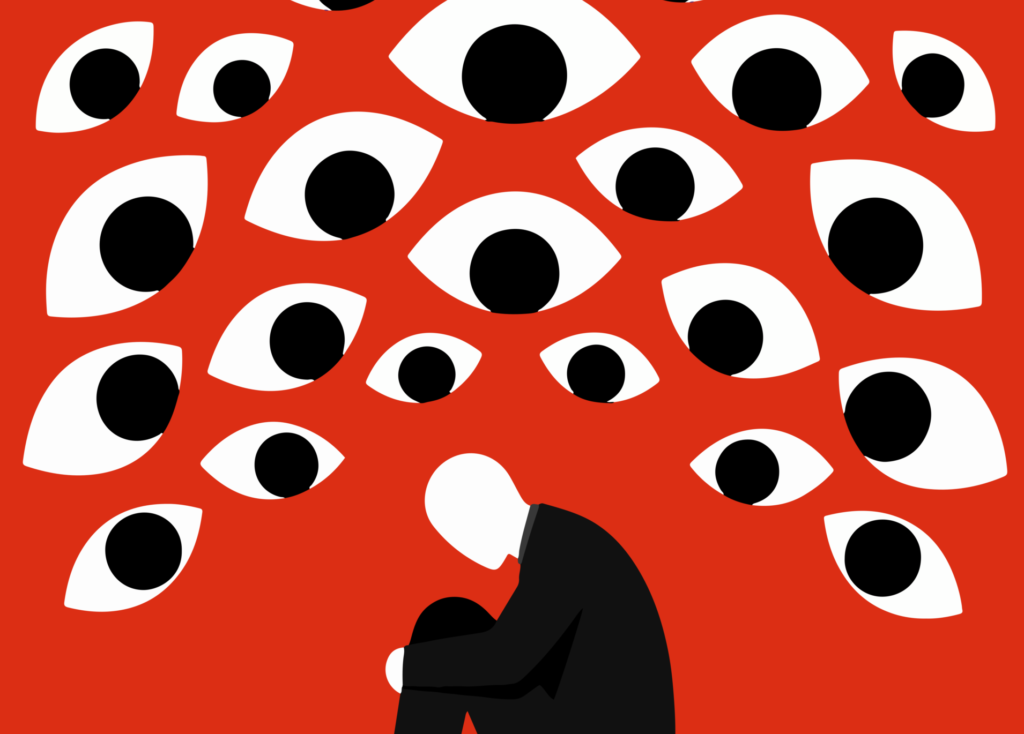
At that point Billie Jean becomes a model for modern media. Contemporary information environments rarely provide complete events. They provide photographs, quotations, video fragments, statements from interested parties, selected chronology and expert interpretation. From these fragments an account is assembled, and because coherent accounts are satisfying we tend to experience the finished narrative as though its causal structure were present in the raw evidence. The similarity with Billie Jean is not that mainstream media necessarily lies, any more than the song establishes that its narrator lies. Information can be individually accurate while the narrative produced from its selection and sequencing remains underdetermined.
No conspiracy is required. Journalists, editors, politicians, analysts, commentators and audiences all work under constraints of time, attention and prior belief. Digital platforms add pressure by rewarding material that generates immediate engagement. Ambiguity performs badly in such an environment. Probability is cumbersome; uncertainty is difficult to headline; “this proves it” is efficient. Modern media therefore competes for the same intuitive machinery that Billie Jean activates.
Nor is the danger confined to institutional media. Distrust can become a heuristic as crude as unquestioning trust. Once the proposition that mainstream media systematically distorts reality becomes a prior, ambiguous evidence can simply be absorbed into an opposite narrative. One audience accepts the photograph; another rejects it automatically. One treats an official denial as authoritative; another treats it as proof of concealment. Escaping one narrative system does not mean escaping the cognitive architecture that made it persuasive.
The dance floor now returns with greater force. Dancing itself is an exercise in interpreting visible behaviour whose internal meaning remains inaccessible. Two people dance and observers infer attraction, intimacy, confidence, dominance or seduction, although movement cannot uniquely determine any of them. With Jackson the ambiguity is greater because movement that another man might use as courtship was also his professional language. The people watching within the song occupy much the same position as we do as listeners: they observe action and infer invisible states.
This is increasingly how public judgement works. We encounter short video clips, battlefield footage without secure provenance, political gestures converted into psychological diagnoses, market moves assigned immediate causes and photographs whose meaning changes when chronology or framing changes. We are continually watching dances and pretending we know what happened in the room afterwards.
The answer is not to abandon interpretation but to separate observation from inference for longer than System 1 naturally wishes to. What do I actually know? Which causal links are explicit and which have I supplied? What important information is absent? What alternative explanation fits the same evidence? What prior assumptions am I importing? What evidence would genuinely make me reverse my conclusion? These are System 2 questions because they interrupt the speed with which narrative converts uncertainty into conviction.
Billie Jean is effective because its music pushes in the opposite direction. The bass line creates inevitability, the vocal performance supplies urgency and the repeated denial acquires the emotional force of certainty even while the narrative refuses to provide equivalent evidential closure. The song feels as though somebody knows exactly what happened, and the listener begins to feel the same.
This helps explain why political and social arguments become so difficult. People often imagine they are disputing facts when they are defending different completed narratives built around facts compatible with several interpretations. Once narrative completion has occurred, each new detail is processed within a causal structure already in place. One person’s suspicious omission becomes another’s irrelevant absence; one person’s incriminating photograph becomes another’s coincidence.
The concept of the unreliable narrator is therefore useful but insufficient because it locates instability inside the artwork. Perhaps Jackson’s narrator is unreliable; perhaps Billie Jean’s reported accusation is unreliable; perhaps both are sincere and one is wrong. The more interesting possibility is that the unreliable narrator stands outside the song. It is the listener who receives scattered observations, manufactures continuity between them and then forgets which elements belonged to the evidence and which were supplied by interpretation.
Familiarity makes this harder to see. Billie Jean has been heard so often that its narrative no longer feels like information requiring evaluation. We think we know the story partly because we know the song. Asking an audience to separate explicit propositions from inference turns something familiar into something uncertain, and that loss of certainty is the point.
The exercise should not end by proving Billie Jean truthful, Jackson innocent or the narrator deceptive. Any such verdict would collapse the ambiguity that gives the piece its value. The purpose is to preserve uncertainty long enough to examine what the mind does with it. We construct reality quickly and audit it slowly, if we audit it at all.
This is why Billie Jean can sit beside Shakespeare, Kahneman and an argument about media without the comparison becoming gimmicky. Billie Jean gives us attraction, performance, warning, accusation, denial, apparent evidence and an unresolved space where the decisive fact ought to be. Shakespeare reminds us that a woman represented through male desire and anxiety cannot easily be separated from the consciousness representing her. Kahneman explains why the listener dislikes leaving that space empty. Modern media shows what happens when the same machinery encounters events of greater consequence under conditions in which speed, emotion and certainty possess value.
The deepest question posed by Billie Jean is therefore not whether the child belongs to the narrator, because the evidence cannot answer it. It is what happens inside us when the evidence stops. Can we preserve the gap between what is known and what is merely plausible, or do we complete the pattern and then forget that the completion was ours? Can we encounter a photograph without turning resemblance into proof, an accusation without turning it into guilt, a denial without turning it into innocence, or a dance without deciding what happened after the music stopped?
We begin believing that we are interrogating Billie Jean and her narrator, but by the end the direction of examination has reversed. The song supplies limited certainty while we supply a great deal. The evidence stays where it is; the priors, frames and stories move around it.
Nothing in the evidence changed. We did